Senior Program Manager, Web · Harvey · New York
Thirteen years planning and overseeing enterprise web work, and I already run this job one step to the side.
Google's marketing properties at Huge: android.com through the Android 12 launch, tv.google, Wear OS. A US utility's transactional .com and mobile app at Vertic, built on a design system with Infosys and twenty-eight-plus engineers. Healthcare, telco and CPG programs in between, from small initiatives to multi-million-dollar global ones. Startups to Fortune 500, B2C and B2B.1
Now at Dow Jones, brand across the web for WSJ.com, Barron's and MarketWatch: the acquisition and subscription flows where a reader becomes a subscriber, the brand touchpoints inside the products themselves, and a portfolio of ten-plus event and conference sites on a design system I defined. Six functions send plans in six formats; one resourced plan goes back out.
Underneath all of it, enterprise engagements of six months to a year holding designers, developers, content, strategy and marketing to one plan. Your second responsibility bullet, not a transfer.
Ten lines judged: nine Strong, one Partial, no Gap.2
Section 01
Thirteen years of holding five disciplines to one plan
Your second responsibility is cross-functional coordination across marketing, brand, design, engineering and creative. Mapped onto my record, discipline by discipline.
- Marketing. Four Google product marketing stakeholders and their Web Strategy Director on one calendar. Now, performance marketing, CRM and event marketing are three of my six requesting functions.
- Brand. Brand steward inside Dow Jones product surfaces, and owner of the design system behind the event properties.
- Design. Four to six designers directed at Google, all reporting elsewhere. Now, design, content design and copy resourced weekly.
- Engineering. A separate engineering team builds the event sites. Before that, twenty-eight-plus Infosys engineers past a design-system handoff.
- Creative. Motion, 3D and video vendors brought to one launch date on The Row at Everyrealm. A hundred short-form assets through one gated pipeline at GE Healthcare.
-
android.com, tv.google and wearos.google.com
Two years embedded in Google’s Android pod from an agency seat.11 One launch calendar across three properties that shared components but not release dates: roadmap, creative, content, deployment and localization, all against an announced Android 12 date. The web had to land with the release, and not only the pages people were being pointed at: the security and compliance pages had to be right on the day too, and those are the ones where an error is not a marketing problem. Nobody in that chain reported to me.
-
Arizona Public Service
Three months of UX research, eight of UI and UX design, a design system across hundreds of public, account-based and transactional pages, then into production with Infosys and twenty-eight-plus engineers. I ran the requirements gathering with stakeholders and planned the research phase so its output landed in time to feed sprint planning on both the design and the engineering side, then structured the review cadence so misalignment surfaced before build.
-
GE Healthcare, Reimagining Better Health
A global study taken out through executive presentations, a website, results PDFs and a hundred short-form assets, through one gated pipeline. Nothing shipped that had not cleared its gate. Executives got the same view on the same day every week, written ahead of the week it covered.
Earlier: enterprise .com builds at Vertic for Vodafone, SAP Ariba and Merck, and Google for Work at Beyond, delivered to a tight deadline with the team split across three time zones. Distributed delivery is not new to me: at Vertic the APS build ran with Infosys offshore, and the Android pod spanned coasts.
“Meticulously planned capacity and resources to meet targets across all workstreams while preventing team burnout.”
Section 02
What I ship now, on both sides of the brand line
Your Web team sits where brand, product and go-to-market meet. My job has two halves on either side of that line.
Brand inside the conversion path
I am the brand steward for product touchpoints and product-connected materials across WSJ.com, MarketWatch.com and Barron’s.com, working day to day with the commerce and acquisition product design teams and with subscription strategy on the paths where a reader becomes a subscriber.
Those are the surfaces where a brand standard is easiest to quietly drop in the name of conversion, and holding it there is a different job from holding it on a marketing page. I do not own the funnel’s numbers, so there are no conversion figures here.
The event and conference portfolio
Ten-plus event and conference sites on the same three properties, including WSJ Tech and the Dow Jones Risk Summit. Eight core builds were consolidated onto one design system; six of eight have migrated and two have not.3 Build time for a new site is down about 80%.4
One engineering team did the building. The system half was design work: tokens in Figma for every brand asset, so eight properties could run on one system and still look like themselves. The rest was the CMS. My part was the agreement, with eight owners who each had reason to keep their own build.
Dow Jones defines new events every other week, which is why the answer stopped being effort and became a system: a new site is assembly instead of invention, and each migration proved itself on a live event date.
Section 03
Every line of the posting, judged
Five responsibilities and five qualifications, one line of evidence each. A Partial means a real part of the line is missing; four Strongs carry a named exception.2
-
- Requirement
- Own end-to-end program management, requirements through delivery and retrospective
- Evidence
- This loop today, for a web portfolio: six functions in, one plan out, 120+ requests scoped since June. Exception: retrospectives at project close, four of them, not a standing ceremony.10
- Verdict
- Strong
-
- Requirement
- Cross-functional coordination across marketing, brand, design, engineering and creative
- Evidence
- Six functions weekly, four of them marketing. I resource design, content design and copy against a separate engineering team, and I have run delivery with teams split across three time zones.
- Verdict
- Strong
-
- Requirement
- Vendors, capacity planning and resource allocation without sacrificing craft
- Evidence
- Both chairs: Monaverse and Infosys as the client, Vertic, Huge and POSSIBLE as the vendor. I own the Asana capacity system.
- Verdict
- Strong
-
- Requirement
- Accountability mechanisms: status reporting, dependency tracking, escalation paths
- Evidence
- GE Healthcare’s weekly executive view, written ahead of the week it covered. Five workstreams re-sequenced on one Android calendar. Exception: escalation is my practice, not a published path.
- Verdict
- Strong
-
- Requirement
- Partner with GTM and marketing leadership to translate business priorities into plans and milestones
- Evidence
- Android 12: I held the web to Google’s release plan on a date that could not move, with four product marketing stakeholders and their Web Strategy Director. Six business plans in six formats in, one capacity-aware plan out. Exception: product-launch GTM inside a marketing org, not revenue-side GTM.
- Verdict
- Strong
-
- Requirement
- Six to ten years in program or project management, focused on web, digital or creative programs
- Evidence
- Thirteen years, all of it in that lane. The extra years bought pattern recognition, not a bigger title.
- Verdict
- Strong
-
- Requirement
- Deep agile experience: sprint planning, stand-ups, facilitating retrospectives, progress reports
- Evidence
- Three years at Vertic inside the cadence: requirements gathered with stakeholders, a UX research phase planned so it fed sprint planning on both the design and the engineering side, then stand-ups and scrum through build. Design sprints at Huge. Ceremonies designed from zero at Everyrealm. Exception: four retrospectives, all at project close, including one with the utility client. Not a standing sprint ceremony.10
- Verdict
- Partial
-
- Requirement
- Strong skills with Linear, Asana, Airtable and JIRA
- Evidence
- Asana at implementation-owner depth, extended with tools built against its API. Years of JIRA and Confluence.9 One Airtable build of my own, an agent workflow on Anthropic’s API rather than just a base. Exception: Linear is familiar, not deep, and Airtable is one build rather than years.8
- Verdict
- Strong
-
- Requirement
- Multi-workstream programs from intake through launch around a shared roadmap
- Evidence
- Android 12: one calendar, five workstreams, three properties, a public date that could not move, from an agency seat.
- Verdict
- Strong
-
- Requirement
- Communication and stakeholder management; influence without authority; clarity amidst ambiguity
- Evidence
- Two years inside Google’s pod, no authority over anyone I needed. Four references on record. A year on Search Ads with no date or spec.
- Verdict
- Strong
Section 04
The four tools you name, and where I sit
Depth: 1 is read-only, 3 is fluent daily use, 5 is owning the implementation and building against the API. The word beside the meter is how often I am in it now.
-
Asana
Depth 5 of 5, dailyI own my team’s implementation at Dow Jones for workflows, reporting, capacity and resourcing, I have improved process inside it, and I have built custom AI tools against its API. Knowing a workflow well enough to build the tool for it is a different depth than administering one.
-
JIRA
Depth 4 of 5, weeklyYears of it through the agency era, still in my current stack.9 Sprints, boards and delivery tracking on enterprise builds, from the program seat rather than as the engineering team’s own scrum master.
-
Confluence
Depth 4 of 5, rarely nowYears of it alongside JIRA: where a decision goes so it stops being re-litigated. Notion is the equivalent in my stack now.
-
Airtable
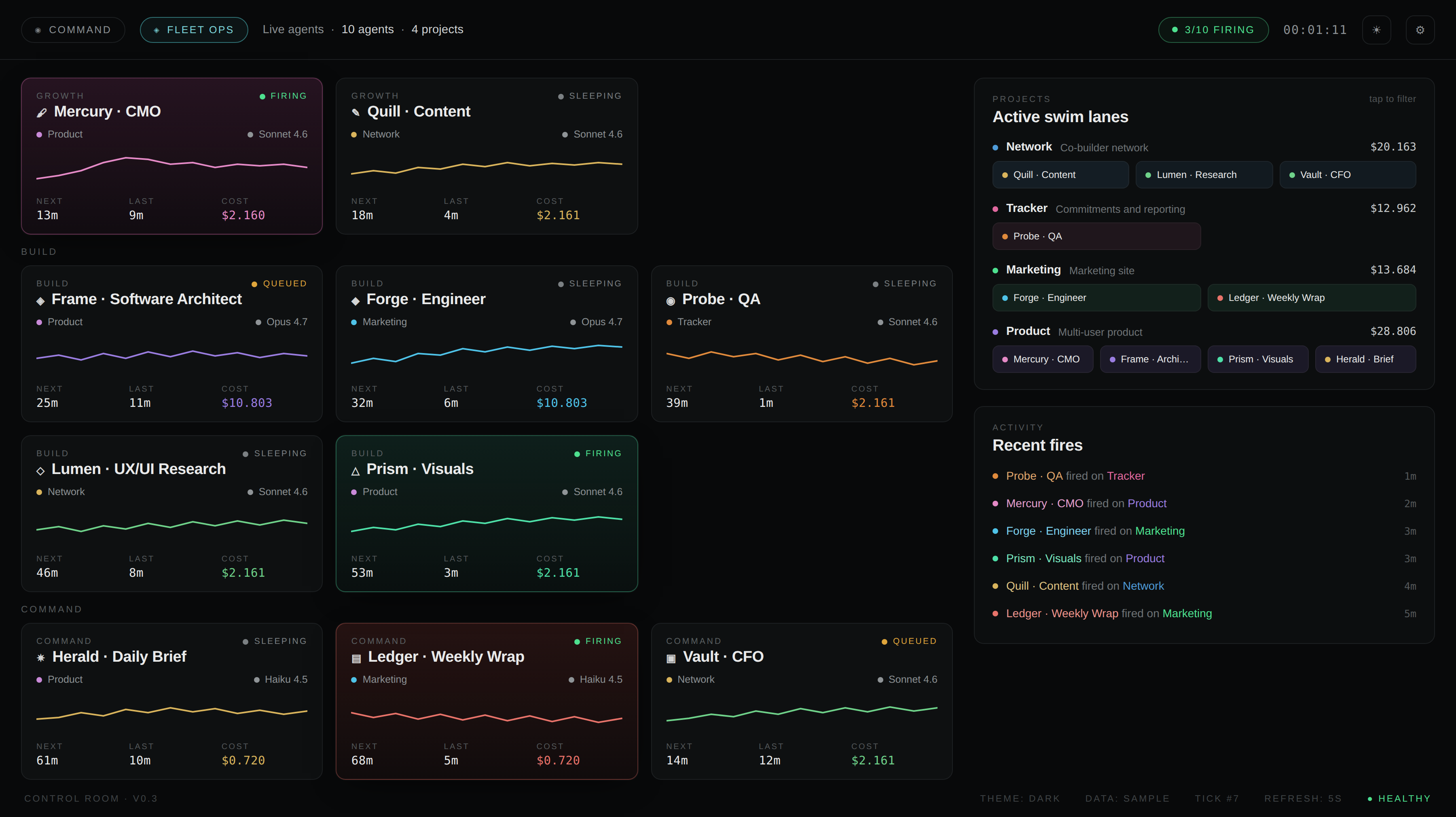
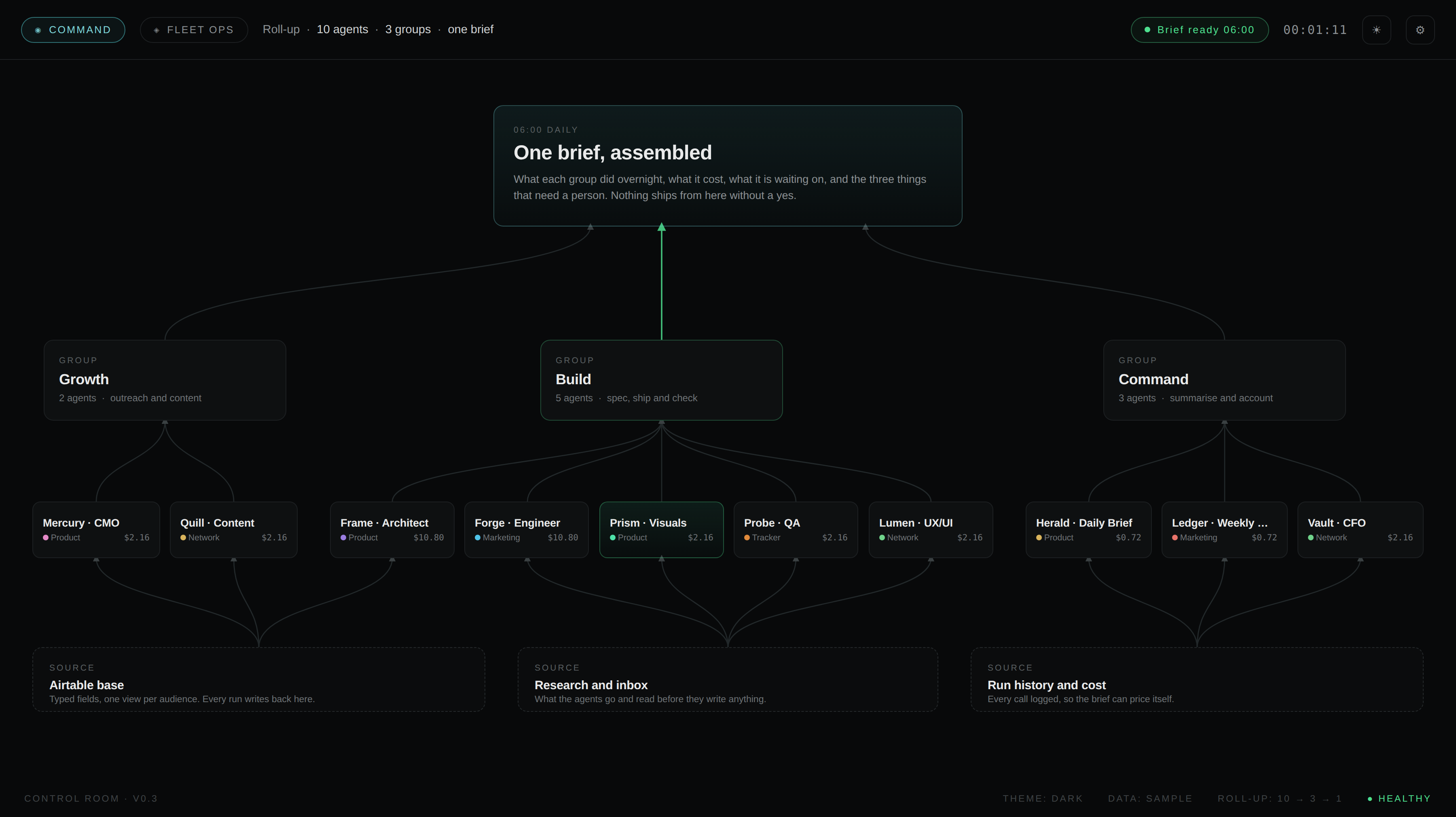
Depth 2 of 5, one buildOne build rather than a habit, and it went further than a base. I set the whole workflow up myself, wired to Anthropic’s API: a set of agents doing outreach and lead generation, writing back into typed fields rather than free text, one view per audience, reporting that falls out of the schema rather than being assembled by hand. The base then feeds a dashboard I built to watch the agents run.
-
Linear
Depth 2 of 5, rarelyFairly familiar, and that is the whole truth of it.8 No project in thirteen years where Linear was the tracker of record.
Around them: Figma, Notion and Webflow Enterprise.
Section 05
The gaps, before anyone has to ask
Three of them, narrower than they look but named plainly. None should be discovered in month four.
Retrospectives, four of them
You ask for sprint planning, stand-ups, facilitated retrospectives and progress reports. Three of those four I have run for years. The three years at Vertic were spent inside the cadence on enterprise builds: I ran requirements gathering with stakeholders, planned the UX research phase so its output arrived in time to feed sprint planning on both the design and the engineering side, then worked through stand-ups and scrum until launch. At Huge the Android work ran in design sprints. At Everyrealm I introduced the ceremonies into a team I had just hired, designed the stand-ups, reviews and crits around signal per minute, and cut the ones that stopped earning their slot, including ones I had introduced.
The retrospective is where I will be precise rather than generous. I have facilitated four, all of them at the close of a project, including one with the utility client after the .com and app went in.10 Four in thirteen years is a habit I reached for at the end of something big, not a standing ceremony held every two weeks with the follow-through that makes one worth holding. That is the version you are asking for and it is the version I would be building. I also do not hold a certification and have never been the scrum master of record for a product engineering team.
It is the most learnable thing on your list, which is why overclaiming it would be the worst trade here. Your first bullet ends at retrospective, so I would rather you know the real number now: four, at project close, on top of a cadence I already know from the inside.
Linear
Strongly preferred, and I am only fairly familiar. What sits next to it is a neighboring tool I own at implementation depth. Tools have never been what took me time; the schema underneath them is, and that transfers on day one.
Pace, GTM and the legal domain
My startup year was Everyrealm, a16z-backed: creative function built from nothing, kept shipping through a downturn and a pivot until the business wound down. One year, and a market falling rather than a company scaling. What I can evidence at your pace is throughput against dates that do not move, about thirteen fixed-date go-lives in five months.1
I have never partnered with a sales organization carrying a pipeline number, so GTM is the line I would be learning on. And I have never worked in a law firm. What I do have is a family of them: I grew up around the work and my sister is a partner at one, so billable hours, the way a matter moves, and what actually eats a lawyer’s week are not new vocabulary to me. That is familiarity, not domain expertise, and I would not dress it up as more. What is adjacent professionally is delivery under review rather than domain: GE Healthcare’s gated pipeline, and a pharmaceutical MVP redesign delivered inside the Endo and Mallinckrodt merger. Sequencing reviewers against a date that cannot move is familiar. Knowing what a firm buys and why is the part I would be learning, and on a Web team I would be serving the people who already know.
Section 06
I build the instruments I need
The boundary first. I am not an engineer and I do not hand-write production code. I specify the system, direct the AI agents that build it, review what comes back and send it round again, with staff engineer friends advising.5 The skill is knowing what to ask for, and recognizing when the answer is structurally wrong.
The resourcing hour
Capacity, priority and whose work gets cut, decided out loud in front of the people it lands on. So I built a resourcing tool for my own team.
Capacity is computed rather than assumed, with time off, standing meetings and partial weeks off the top, so an over-capacity week surfaces before the work is promised away. The decision made in the hour reaches the plan of record without a second write-up, and nothing moves until a person confirms it. Fully built, in weekly use on my own planning, not deployed across Dow Jones.7
The resourcing hour
In the meetingThe meeting updates the plan, instead of someone updating the plan after the meeting.
Relay
The intake layer.6 Six teams, six spreadsheet formats. Relay settles six vocabularies into one schema, leaves a field missing rather than guessing it, chases the gap until it closes, and proposes a ranking where every item carries a reason and a capacity cost. Priority stays my call, every override is recorded, and the plan goes into Asana over the API.
The counter-evidence. Relay has exactly one user: me, weekly, on real quarterly planning. The six teams send spreadsheets and never open it. The evidence that I move other people is not software. It is eight property owners, six of them now on a build they did not choose.
Plan here execute there Asana over the API
One more, and it was an exercise
A friend asked for help across a set of his own products, and I used the work to learn the model properly rather than from the outside. I set the workflow up myself on Anthropic’s API: agents running outreach, lead generation and reporting, writing into typed Airtable fields, and a control view I built on top so I could see what each agent costs, when it last ran and what it is waiting on. That is the Airtable build in the tooling section, and the reason I would not call myself an Airtable expert on the strength of it.12
Section 07
Why here, and the six months
The honest part first, since a careful reader has already done the arithmetic. I am about six months into my role at Dow Jones and I am not running from anything: the work is real and I am doing well at it. What is pulling is a preference that took thirteen years to get clear.
Three things make it specific. I have spent thirteen years keeping web properties shipping against dates that could not move, almost all of it one step removed from the thing the company actually sells. Your Web team exists so the site keeps pace with the product, so the calendar is set by the product rather than a campaign.
And the problem in the posting is the one I spent this year on at a smaller scale: new properties arriving faster than anyone can hand-build them, so the answer stops being effort and becomes a system. I have done that once, six of eight migrated, and I know which half was hard. Worth acting on when the role appears, rather than finding out in month four that I watched it go past.
The third reason is the one that actually moved me. Almost all of those years were spent inside enterprise organizations, learning how they buy, approve and change their minds. Harvey is building the tools that will change how that same kind of company does its work, and I would rather help ship those than keep making the case for a category from the outside. I want to be at a modern company built on AI rather than one adding it later, and at one whose product I actually admire.
There is a structural version of the same point. Dow Jones is a serious institution and its web work is real, but it is a legacy editorial business, and what I steward there is an umbrella of brands, each with its own owner, its own calendar and its own idea of what good looks like. A lot of the job is holding that umbrella straight. Harvey is one product and one goal, and everything the Web team ships points at it. I do my best work when the whole team is aimed at one thing, and I would rather aim at yours.
Your three values, demonstrated
Decisiveness. I do not bring leadership the news that a team feels stretched. I bring the news that the plan assumes 1.4 times the capacity that exists, here are the three things I would cut, and here is the one I recommend. A protected roadmap is an arithmetic argument.
Simplicity. Eight builds into one system. Six vocabularies into one schema. A library of 200 components at 40% adoption is a worse asset than 60 at 90%.
Job’s Not Finished. Two of eight properties have not migrated. Relay was built for my function and my team and has not been adopted company wide, which is a matter of distributed regulatory systems and decisions above me rather than appetite. The event site system, by contrast, is adopted. Nobody asked me for any of that; I can report it because I am still tracking it.
Happy to walk any row of that ledger.
The one Partial and the four named exceptions are the more useful hour. New York, so office days are not a problem. pr.wvelazquez@gmail.com
Notes
- All from my résumé: Huge on the Android pod from 2020 to 2022, covering android.com including the Android 12 launch, tv.google and wearos.google.com, plus a year-long UI/UX phase for the future of Google Search Ads with four to six designers alongside Google’s Search UX Design Director; Vertic from 2017 to 2020, where the Arizona Public Service .com and app ran a three-month research phase and an eight-month design phase into production with Infosys and twenty-eight-plus engineers. At Dow Jones: ten-plus event and conference properties, six requesting functions, and about eight events and five launches in five months, four in the peak month. The every-other-week cadence is my own account. ↩
- Verdicts are self-assessed against the posting as published in August 2026. Anything said about Harvey comes from the posting and Harvey’s own published material as of August 2026. ↩
- Eight properties were in scope, six have migrated, two have not, and I always say so. ↩
- About 80% is my own before-and-after estimate of engineering time to stand up a new event site, not a dashboard figure. ↩
- Not an engineer. Mine is the specification, the data model, the review, and the decision to send it round again. The writing on this page is mine. ↩
- Relay is internal, has no public address, and has exactly one user. 120+ requests scoped through it since June. ↩
- The claim to check hardest. The resourcing tool is fully built and in weekly use on my own planning, not deployed across Dow Jones. ↩
- “Fairly familiar” is my own wording and I have left it there. No project in my record where Linear was the tracker of record. ↩
- Years of both in the agency era. JIRA is in my current stack; Confluence is not. ↩
- Sprint planning, stand-ups and scrum are in my record, three years of them at Vertic and design sprints at Huge. Retrospectives: four, facilitated at the close of a project, one of them with the utility client. Not a recurring sprint ceremony, and the count is mine from memory rather than a calendar. ↩
- Huge, Senior Project Manager on the Android pod, agency side. The description paraphrases a reference from Google’s Director of Web Marketing Strategy. ↩
- Built for a friend’s products, not mine and not my employer’s. One build rather than a practice, and I used it to learn how the model behaves when it is running unattended. The screenshot shows sample figures and substituted project names. ↩